
Arthritis in Singapore: Symptoms, Causes & Treatment Options

Arthritis is a broad term for conditions that affect the joints. Depending on the type, it can cause joint pain and stiffness, swelling, reduced mobility and difficulty with everyday activities.
Although arthritis becomes more common with age, it is not simply a normal part of getting older. Osteoarthritis, rheumatoid arthritis, gout and other forms of arthritis have different causes and require different approaches to management.
If you have persistent joint pain, the first step is understanding what may be causing it. An appropriate assessment can help determine whether your symptoms are consistent with arthritis, another musculoskeletal condition, or a problem that requires medical evaluation.
In this guide, we look at the common arthritis symptoms, causes and risk factors, how arthritis is assessed, and the treatment options available in Singapore, including physiotherapy, exercise-based rehabilitation and other conservative approaches.
What Is Arthritis?
Arthritis refers to a group of conditions that affect the joints and surrounding tissues.
Different types of arthritis involve different processes. Osteoarthritis is associated with changes to the structures within a joint, while rheumatoid arthritis is an autoimmune condition that causes inflammation. Gout occurs when urate crystals accumulate in a joint and trigger inflammation.
The two commonly recognised forms are:
- Osteoarthritis
- Rheumatoid arthritis
Other forms include:
- Gout
- Psoriatic arthritis
- Ankylosing spondylitis
- Reactive arthritis
Because these conditions have different causes, persistent joint symptoms should not be self-diagnosed.
Common Arthritis Symptoms
Arthritis symptoms vary depending on the type of arthritis, the joint affected and the severity of the condition.
Common symptoms include:

Symptoms may develop gradually, particularly with osteoarthritis, while inflammatory forms of arthritis can sometimes develop more rapidly.
关节疼痛
Joint pain is often the symptom that prompts people to seek joint pain treatment in Singapore.
Arthritis-related pain may feel like:
- A dull or aching discomfort
- Pain during certain movements
- Discomfort after prolonged activity
- Pain that repeatedly affects the same joint
- Increasingly persistent pain
However, joint pain does not automatically mean arthritis. Tendon problems, muscle injuries, bursitis, nerve-related conditions, gout and other musculoskeletal problems can produce similar symptoms.
An assessment can help identify the likely source of the pain before deciding on an appropriate management approach.
Joint Stiffness
Stiffness is another common arthritis symptom.
It may be noticeable:
- After waking up
- After sitting for a prolonged period
- Following a long drive or flight
- After resting following physical activity
The pattern of stiffness can provide useful clinical information. Osteoarthritis often causes relatively brief stiffness after inactivity, while prolonged morning stiffness can occur with inflammatory forms of arthritis.
Persistent or significant morning stiffness should therefore be assessed rather than dismissed as part of ageing.
Joint Swelling
Some forms of arthritis can cause swelling around an affected joint.
The area may appear enlarged and feel warm, tender or uncomfortable when moving.
A joint that becomes suddenly hot, swollen and painful, particularly when accompanied by fever or feeling unwell, requires prompt medical assessment.
Reduced Range of Motion
Pain, swelling and changes within a joint can restrict movement.
You may notice difficulty:
- Bending or straightening your knee
- Raising your arm
- Turning your neck
- Squatting
- Gripping objects
- Moving your hip comfortably
Reduced mobility can eventually affect how you work, exercise and perform everyday activities.
Difficulty With Everyday Activities
Arthritis affecting the knees, hips, ankles or feet can make weight-bearing activities more difficult.
You may find it harder to:
- Walk longer distances
- Climb stairs
- Stand for extended periods
- Get out of a chair
- 运动
- Carry groceries
When joint symptoms begin changing the way you move, an assessment can help identify whether reduced strength, mobility or other functional factors are contributing to the problem.
Clicking, Grinding or Popping
Clicking, popping or grinding sensations can occur in many joints and do not necessarily indicate arthritis.
They are more significant when accompanied by:
- Persistent pain
- Swelling
- Reduced movement
- Instability
- Locking or catching
These symptoms may warrant further assessment.
Weakness Around the Joint
Pain can lead people to reduce their activity. Over time, reduced activity may contribute to weakness in the muscles supporting an affected joint.
Maintaining appropriate muscle strength is therefore an important part of preserving physical function and mobility.
What Causes Arthritis?
The causes of arthritis depend on the type.
Osteoarthritis
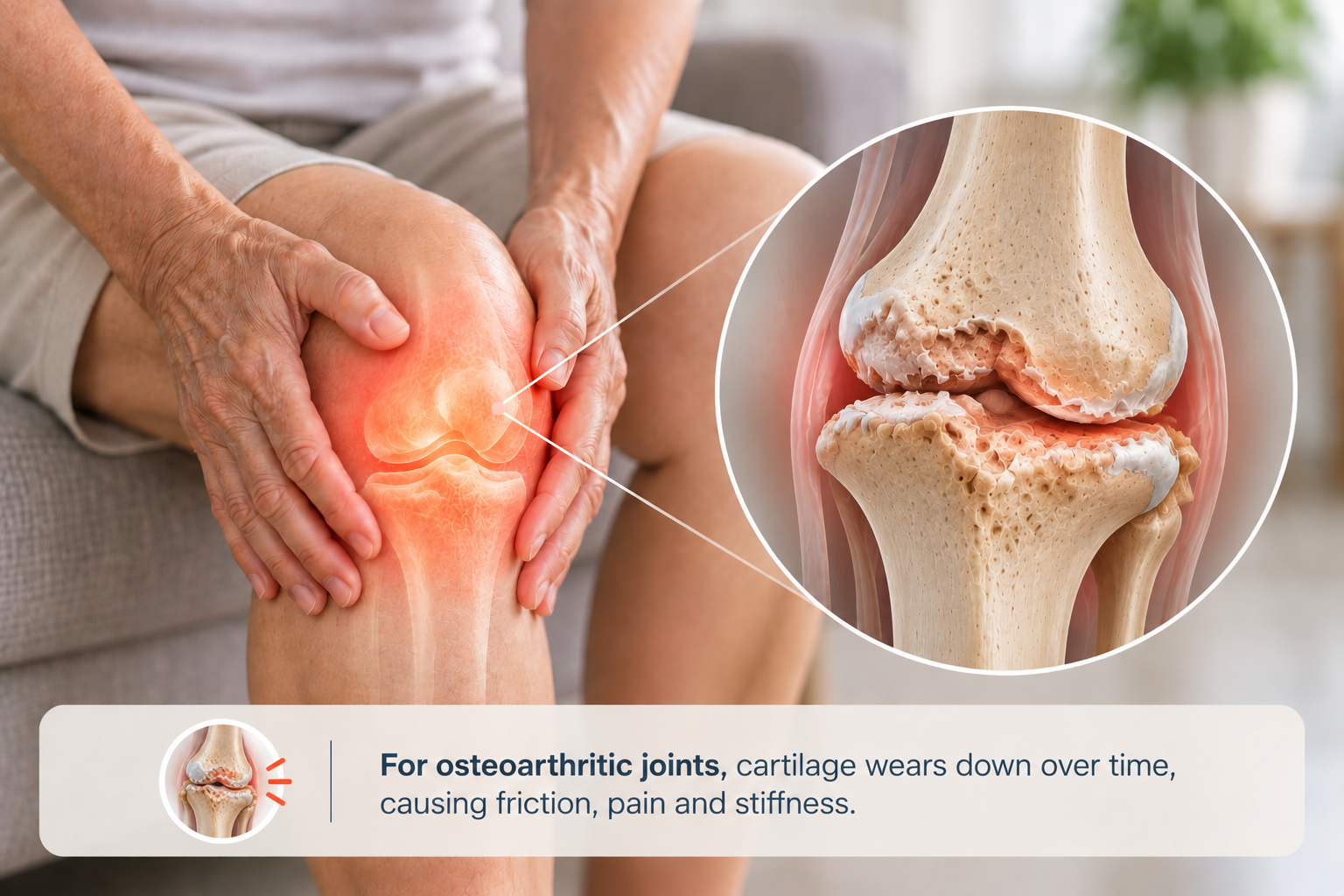
Osteoarthritis involves changes to the structures within a joint and becomes more common with age.
Risk may also be influenced by:
- Previous joint injuries
- Repeated joint loading
- Excess body weight
- Certain occupational or sporting demands
- Genetics
- Other structural or health factors
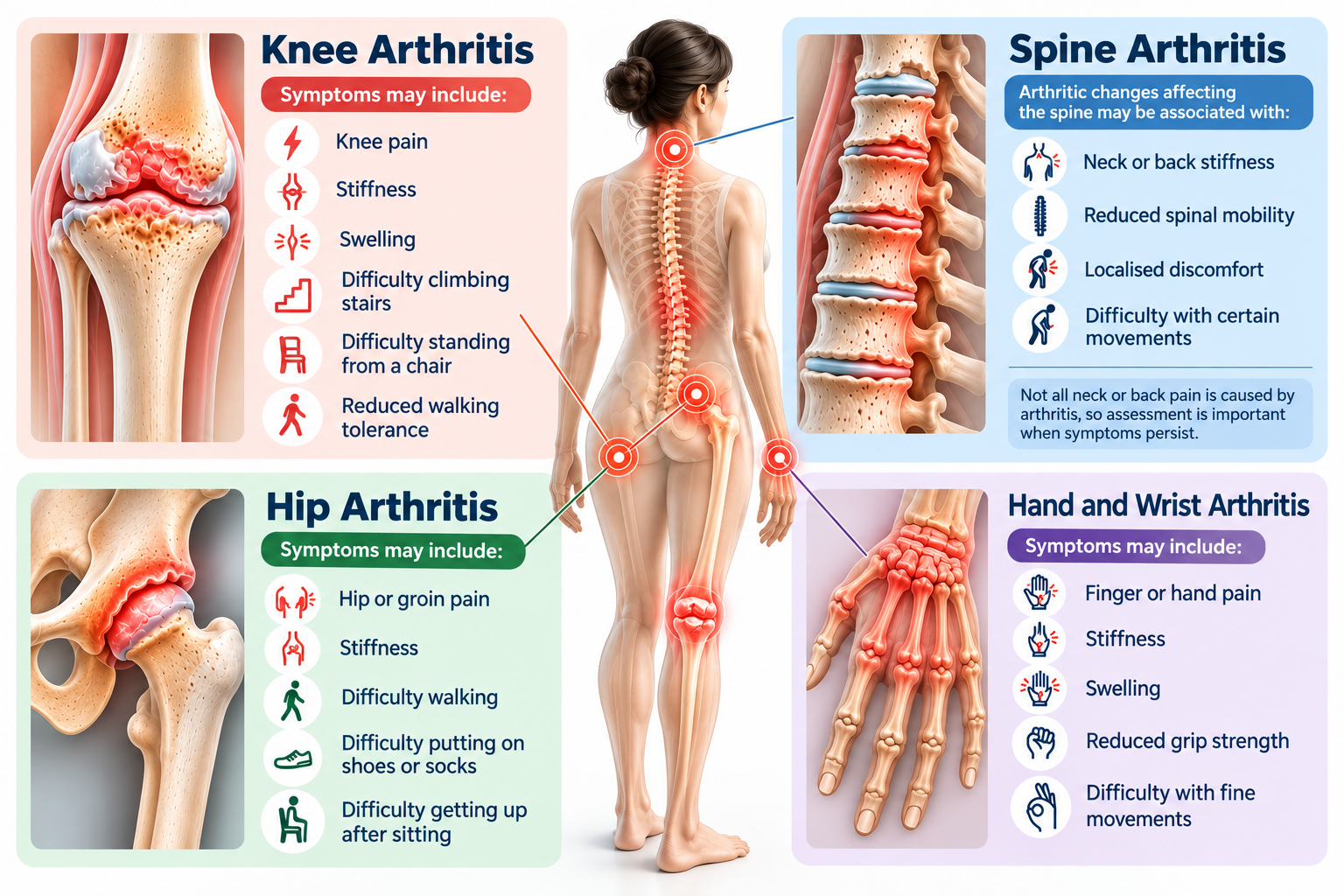
The knees, hips, hands and spine are commonly affected.
Rheumatoid Arthritis

Rheumatoid arthritis is an autoimmune condition in which the immune system attacks tissues within the joints.
Symptoms may include:
- Joint pain
- Swelling
- Prolonged morning stiffness
- Fatigue
- Reduced physical function
Because rheumatoid arthritis can affect multiple joints and cause progressive joint damage, suspected inflammatory arthritis should be medically assessed.
Gout
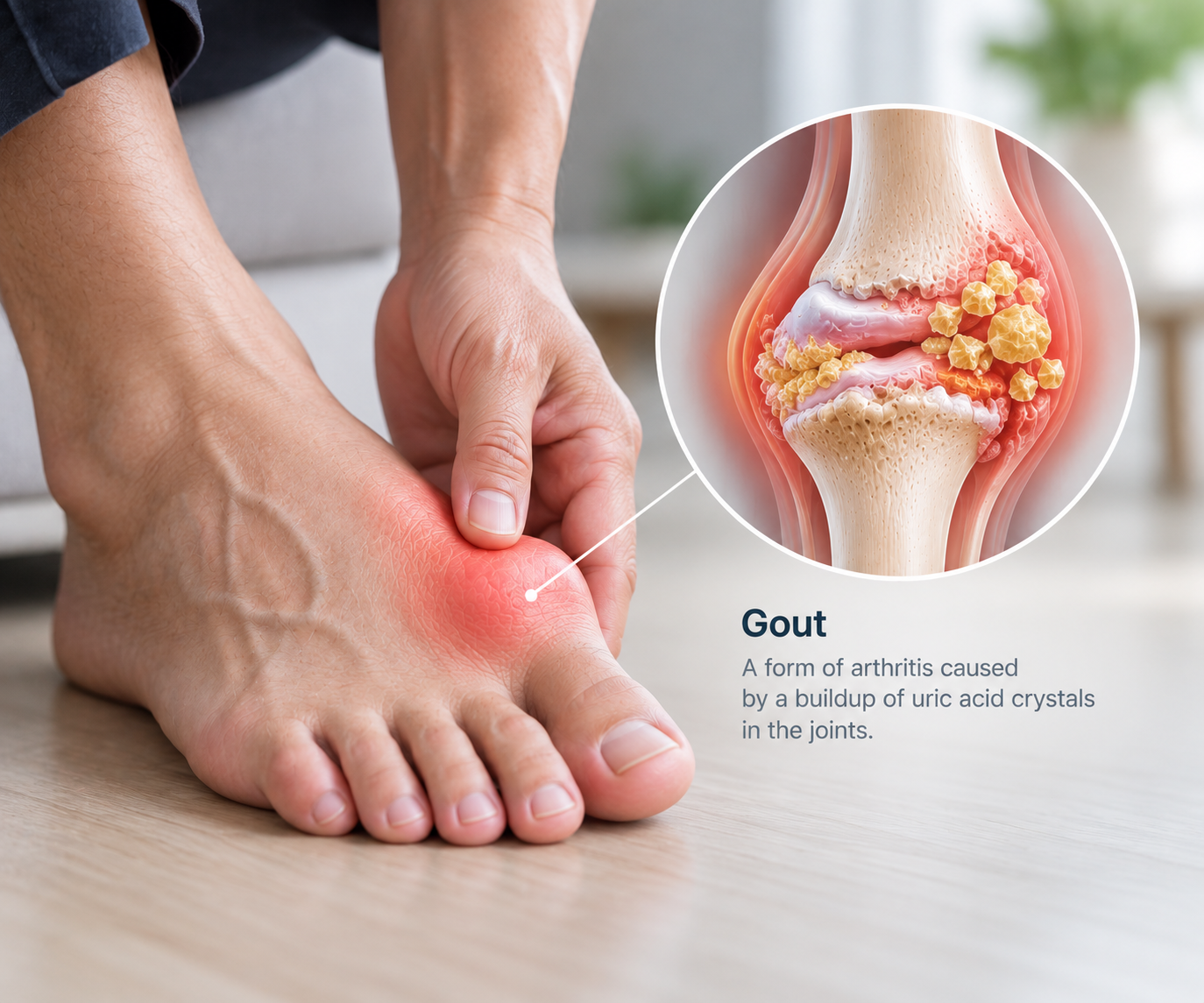
Gout is an inflammatory form of arthritis associated with urate crystal deposits in joints.
It can cause sudden and intense pain, swelling and inflammation, commonly affecting the big toe but potentially involving other joints.
Gout requires appropriate medical management. Lifestyle measures may support management but should not replace prescribed treatment when medication is indicated.
Other Types of Arthritis
Other forms include psoriatic arthritis, ankylosing spondylitis and reactive arthritis.
Their causes and treatment approaches differ, which is why identifying the underlying condition matters.
Which Joints Are Commonly Affected?
Arthritis can affect many joints, although some areas are more commonly involved.
Risk Factors for Arthritis
Several factors may increase the likelihood of developing certain forms of arthritis.
| Risk Factor | Why It May Matter |
|---|---|
年龄 | The likelihood of osteoarthritis generally increases with age. |
Previous joint injury | Previous injuries can increase the risk of osteoarthritis in the affected joint. |
Excess body weight | Additional loading can increase mechanical stress on weight-bearing joints. |
Family history | Genetics can influence susceptibility to some forms of arthritis |
Low physical activity | Reduced activity can contribute to muscle weakness and reduced physical function. |
Repetitive joint loading | Certain work or sporting activities may repeatedly stress particular joints. |
Autoimmune conditions | Autoimmune processes can contribute to inflammatory forms of arthritis. |
吸烟 | Smoking is associated with an increased risk of rheumatoid arthritis. |
Having one or more risk factors does not mean that arthritis will develop.
How Is Arthritis Diagnosed?
There is no single test that identifies every type of arthritis. Assessment usually begins with your symptoms and medical history.
Medical History
A healthcare professional may ask about:
- When symptoms began
- Which joints are affected
- Whether symptoms are constant or intermittent
- Morning stiffness
- Swelling
- Previous injuries
- Activities that aggravate symptoms
- Family history
- Other health conditions
The pattern of your symptoms can help determine what further assessment may be appropriate.
物理评估
A physical examination may assess:
- Joint movement
- Range of motion
- Muscle strength
- Swelling
- Tenderness
- Joint stability
- Functional movement
- Walking pattern
For people with musculoskeletal symptoms, this can also help identify physical factors contributing to movement limitations.
Imaging
Depending on the suspected condition, a doctor may recommend:
- X-rays
- 超声波
- MRI
The appropriate imaging method depends on the symptoms and suspected condition. Imaging is not necessarily required for every person with joint pain.
血液化验
Blood tests may be recommended when inflammatory or autoimmune arthritis is suspected.
Depending on the clinical situation, investigations may include inflammatory markers, rheumatoid factor, anti-CCP antibodies or uric acid levels.
Arthritis Treatment Options in Singapore
The right approach to arthritis treatment in Singapore depends on the type of arthritis, the joints affected, the severity of symptoms and your overall health.
Treatment may involve conservative care, exercise, physiotherapy, medication, lifestyle changes or surgery, depending on the condition and individual needs. For osteoarthritis, therapeutic exercise is a core component of management, while manual therapy may be considered alongside exercise for certain presentations such as hip and knee osteoarthritis.
Chiropractic Treatment
Chiropractic care at NATRAHEA focuses on musculoskeletal movement, spinal mobility and physical function. Following an assessment, chiropractic care may involve hands-on adjustments and movement-based approaches where appropriate.
For someone experiencing joint-related musculoskeletal symptoms, the focus may be on supporting mobility and function rather than treating or reversing the underlying arthritis.
Chiropractic care should not be considered a replacement for medical diagnosis or management of inflammatory forms of arthritis such as rheumatoid arthritis or gout. When symptoms suggest an underlying medical condition, appropriate medical assessment should take priority.
Physiotherapy and Exercise-Based Rehabilitation
Physiotherapy takes a rehabilitation-focused approach to movement, mobility and physical function. At NATRAHEA, physiotherapy combines personalised exercise programmes with manual therapy based on an individual’s assessment and functional needs.
A physiotherapy programme may include:
- Strengthening exercises
- Mobility exercises
- Flexibility work
- Balance training
- Functional exercises
- Movement retraining
- Activity modification
- Guidance on managing physical activity
Exercise should be tailored to the individual’s symptoms, physical capacity and functional goals. For osteoarthritis, appropriately tailored therapeutic exercise is a core part of management.
Conservative Musculoskeletal Care
Conservative care can focus on maintaining movement, strength and physical function without surgery.
Depending on the assessment, this may involve:
- Mobility work
- Movement-based exercises
- Strength and conditioning
- Postural or ergonomic advice
- Selected manual approaches
For hip and knee osteoarthritis, NICE recommends considering manual therapy alongside therapeutic exercise rather than using it as a standalone treatment.
Medication
Medication may be recommended by a doctor to manage pain or inflammation.
The appropriate medication depends on the type of arthritis, symptoms, other health conditions and existing medicines. People with inflammatory arthritis may also require disease-specific medical treatment.
外科手术
Surgery may be considered when arthritis significantly affects mobility or quality of life despite appropriate non-surgical management.
Joint replacement is one option for appropriately selected people with severe osteoarthritis affecting joints such as the hip or knee.
A specialist assessment is required to determine whether surgery is appropriate.
Chiropractic vs Physiotherapy: What's the Difference?
Both chiropractic care and physiotherapy can involve hands-on techniques and movement-based approaches, but their focus and treatment methods can differ.
At NATRAHEA, the choice between chiropractic care and physiotherapy depends on the individual’s symptoms, assessment findings and functional needs.
| 脊椎 护理 | 物理治疗 | |
|---|---|---|
Primary focus | Musculoskeletal movement, spinal mobility and physical function | Rehabilitation, mobility, strength and physical function |
Assessment | May consider spinal and musculoskeletal movement, mobility and functional concerns | May assess movement patterns, strength, mobility, posture and functional limitations |
Common approaches | Hands-on chiropractic adjustments and movement-based approaches | Targeted exercises, manual therapy, mobility and functional rehabilitation |
Exercise component | May incorporate movement or exercise guidance where appropriate | Exercise is a central component of rehabilitation |
Suitable focus | Musculoskeletal symptoms where chiropractic care is considered appropriate following assessment | Mobility limitations, weakness, movement difficulties and rehabilitation needs |
For arthritis | May support movement and musculoskeletal function; should not be presented as treating or reversing arthritis | May support mobility, strength and physical function as part of conservative management |
Location at NATRAHEA | Available across NATRAHEA’s chiropractic clinics | Currently available at NATRAHEA’s Tiong Bahru Central Plaza outlet |
NATRAHEA’s chiropractic services are available across its Singapore clinics, while its physiotherapy service is currently offered at the Tiong Bahru Central Plaza outlet.
The two approaches are not necessarily mutually exclusive. The appropriate option depends on the individual’s presentation, assessment findings and goals.
Can Arthritis Be Managed Without Surgery?
Non-surgical osteoarthritis treatment focuses on managing symptoms, maintaining mobility and supporting physical function.
Depending on the individual’s condition, this may include:
- Therapeutic exercise
- Strengthening
- Physical activity
- Weight management where appropriate
- Activity modification
- Education
- 疼痛管理
- 物理治疗
The appropriate approach depends on the type and severity of arthritis, as well as the person’s symptoms and functional goals.
When Should You Seek Professional Assessment?

Persistent joint symptoms should not simply be dismissed as part of ageing.
Consider seeking professional assessment if you experience:
Persistent or Recurrent Joint Pain
Pain that continues for several weeks, repeatedly returns or progressively affects your activities deserves further evaluation.
Prolonged Morning Stiffness
Morning stiffness that lasts for an extended period, particularly when accompanied by swelling or multiple affected joints, may require medical assessment.
Swelling, Warmth or Redness
A persistently swollen joint should be assessed.
A joint that becomes suddenly hot, red and severely painful, especially with fever or feeling unwell, requires prompt medical attention.
Multiple Painful or Swollen Joints
Pain or swelling affecting several joints can occur with inflammatory forms of arthritis and should be appropriately evaluated.
Reduced Mobility
Difficulty bending, straightening or moving a joint normally may indicate an underlying joint or musculoskeletal problem.
Everyday Activities Become Difficult
Seek assessment when joint symptoms begin affecting walking, stairs, exercise, work, sleep or household activities
Why Assessment Matters
Joint pain has many possible causes.
Similar symptoms may occur with:
- Tendon problems
- Muscle injuries
- Ligament injuries
- Bursitis
- Nerve-related conditions
- Gout
- Inflammatory arthritis
- Other musculoskeletal conditions
An assessment helps establish what may be contributing to your symptoms and whether conservative care, medical evaluation or further investigation is appropriate.
This is particularly important when symptoms are persistent, worsening, affecting multiple joints or accompanied by significant swelling.
How NATRAHEA Supports Joint Health and Mobility
At NATRAHEA, the focus is on understanding how pain, mobility and physical function may be affecting the way you move.
An assessment may consider:
- Joint mobility
- Muscle strength
- Movement patterns
- Posture
- Functional limitations
- Activity levels
- The impact of symptoms on everyday activities
Where appropriate, care may include physiotherapy, exercise-based rehabilitation, mobility work, ergonomic advice and selected conservative musculoskeletal approaches.
The aim is to support movement, physical function and day-to-day mobility.
NATRAHEA’s services should not be presented as a replacement for medical diagnosis or treatment of inflammatory, systemic or otherwise complex forms of arthritis. When symptoms suggest a condition requiring medical evaluation, appropriate medical care should form part of the individual’s management.
Frequently Asked Questions About Arthritis
1. What is the most common type of arthritis?
Osteoarthritis is the most common form of arthritis. It involves changes to the structures within a joint and becomes more common with age.
2. Can arthritis be cured?
Most forms of arthritis do not currently have a complete cure. Appropriate management can, however, help many people manage symptoms and maintain mobility and physical function.
The approach depends on the type of arthritis.
3. Is arthritis a normal part of ageing?
No. Age increases the likelihood of certain forms of arthritis, particularly osteoarthritis, but significant joint pain or stiffness should not automatically be considered a normal part of ageing.
4. What are the early signs of arthritis?
Common symptoms include joint pain, stiffness, swelling, tenderness and reduced range of motion.
The pattern of symptoms is important because different types of arthritis can present differently.
5. Can exercise help arthritis?
Appropriately tailored exercise can help people with osteoarthritis manage symptoms and maintain physical function. Strengthening and aerobic exercise are commonly incorporated into rehabilitation programmes. (Nice)
6. Is walking good for arthritis?
Walking can be an accessible form of physical activity for many people. The appropriate amount depends on the affected joint, symptoms and physical capacity.
If walking consistently aggravates your symptoms, an assessment can help determine whether your activity or exercise programme should be modified.
7. Can a chiropractor treat arthritis?
Chiropractic care should not be presented as a cure or treatment for arthritis.
For suitable individuals, conservative musculoskeletal care may focus on movement, mobility and physical function. Suitability depends on the individual’s presentation and assessment findings.
People with suspected inflammatory arthritis, acute unexplained swelling or other concerning symptoms may require medical evaluation.
8. What is the best arthritis treatment in Singapore?
There is no single treatment that is appropriate for everyone.
Management depends on the type of arthritis, affected joints, severity, symptoms, functional limitations and overall health.
For osteoarthritis, treatment commonly includes tailored exercise and other conservative measures, with medication or surgery considered when appropriate. (Nice)
9. When is surgery needed for arthritis?
Surgery may be considered when arthritis significantly affects mobility or quality of life and appropriate non-surgical management has not provided sufficient improvement.
An orthopaedic specialist can determine whether surgery is appropriate.
10. Can arthritis get worse over time?
Some forms of arthritis can progress, although the course varies between conditions and individuals.
Persistent or worsening symptoms should be assessed rather than assumed to be an inevitable part of ageing.
结论
Arthritis can affect joint comfort, mobility and everyday function. However, joint pain does not automatically mean arthritis, and different forms of arthritis require different approaches.
If you have persistent joint pain and stiffness, swelling, reduced mobility or difficulty with everyday activities, an appropriate assessment can help clarify what may be contributing to your symptoms.
For people with musculoskeletal symptoms, physiotherapy and appropriately tailored exercise may form part of a conservative management plan. Other approaches may be considered according to the individual’s assessment findings and needs.
At NATRAHEA, our approach focuses on understanding movement and physical function so that appropriate care can be recommended based on the individual.
If your symptoms are persistent, worsening, affecting several joints or accompanied by significant swelling, seek appropriate medical evaluation.
If you’re looking for arthritis treatment in Singapore, joint pain treatment in Singapore or support for ongoing joint stiffness and mobility problems, an assessment is a useful starting point for understanding your symptoms and exploring the next steps.
References
- Singapore Ministry of Health — Healthcare services advertising requirements. (Ministry of Health)
- NICE — Osteoarthritis in over 16s: diagnosis and management (NG226). (Nice)
- Singapore Ministry of Health — Healthcare advertising and regulatory framework. (Ministry of Health)
真实反馈

我们的病人真实反馈

*Staff here where all friendly and give you warm welcome, very accomodating and will notify you on the incoming schedule you make.
Thanks NATRAHEA Kovan🙏🙌🏻
新加坡 NATRAHEA 诊所地址
预约颈痛治疗
如果你已经有一段时间没有注意隐隐作痛 ,或 强烈感觉到身体不平衡,请不要坐视不理。
你应该一直都很舒服。
- 适用于首次光临 NATRAHEA 的顾客或 过去 6 个月内未光临过 NATRAHEA 的顾客。
- 日期和时间选择仅为暂定,先到先得。我们的团队成员将与您联系,确认您的选择,或 情况建议您另约时间。
- 仅对新加坡人、永久居民、LTVP或 工作准证持有者有效。游客不适用。
- 您可以在付款页面选择暂定预约日期。预约以先到先得为原则。我们的客户服务团队将在一天内与您联系,确认您的预约日期。
- 只有在临床允许的情况下,并经我们的 Circle of Healing 专家建议,才能进行肌肉锻炼。如果您有任何既往病症,请带上您过去的 X 光片。
- 在进行任何治疗之前,如果病情被评估为需要进行 X 光检查,"愈合之环 "专家可能会建议进行 X 光检查。
- 首次就诊时,请携带任何健康转介表、相关医疗报告(X 光片、核磁共振成像等)。或者,您也可以在首次就诊前将报告回复到订单确认电子邮件中。
- 如果您在网上支付时遇到困难,请随时通过 Whatsapp 联系我们,电话:81386088。
奖项 &特色专访